Nature has always been generous in offering humanity sources of healing. However, some resources are so precious that simply describing them as “food” is insufficient. Manuka honey, obtained from the flowers of the Manuka tree (Leptospermum scoparium) growing in the vast, untouched forests of New Zealand, is precisely such a miracle.
Called “liquid gold” worldwide, this honey is much more than just an ordinary breakfast product. Its unique chemical composition and powerful antibacterial properties, which even modern medicine studies with admiration, set it apart from other honeys. So, what is the secret of this honey that we see on shelves at exorbitant prices? Is it really as effective as claimed, or is it just a good marketing strategy? In this guide, we will delve into the depths of Manuka honey and answer all your questions in light of scientific data.
The Key Differences That Make Manuka Honey “Liquid Gold”
Manuka honey immediately stands out even when placed side-by-side with ordinary floral honey. However, the real difference lies at the molecular level, invisible to the naked eye. Most honeys derive their antibacterial power from hydrogen peroxide. But this component is extremely sensitive to heat and light; when it enters the body, it is rapidly broken down by enzymes. What makes Manuka honey special is that it possesses a much more robust defense mechanism, which we call “non-peroxide activity” (NPA).
Unique Antibacterial Power: Methylglyoxal (MGO)
The magical ingredient at the heart of Manuka honey is Methylglyoxal (MGO). Found in only trace amounts in other honeys, Manuka honey contains very high concentrations. Dihydroxyacetone (DHA), a component found in the nectar of the Manuka flower, transforms into MGO during the honey’s maturation process.
MGO is a natural compound that attacks the cell walls of bacteria, preventing their reproduction. Most notably, it has been proven in laboratory tests to be effective even against “superbugs” (such as MRSA) that have developed resistance to modern antibiotics. This makes Manuka honey not just a food, but also a therapeutic agent.
Geographical Indication and Pure Content
Every honey bears the signature of the region where it is produced. Manuka honey is a product specific to certain regions of New Zealand and Australia. However, when “real” Manuka honey is mentioned, New Zealand comes to mind. This is because the New Zealand government has established the strictest inspection and certification systems in the world (such as UMF) to protect this product from counterfeiting.
The purity of this honey depends on a short period (only 2-6 weeks a year) during which the bees collect nectar only from Manuka flowers. If the bees move to other flowers, the MGO level in the honey decreases, and the famous “Manuka effect” weakens. Therefore, each harvest undergoes rigorous laboratory testing to confirm its purity.
Distinguishing Characteristics: Taste, Texture, and Color
If you’ve never tasted Manuka honey before, your first experience might surprise you.
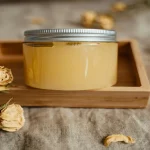
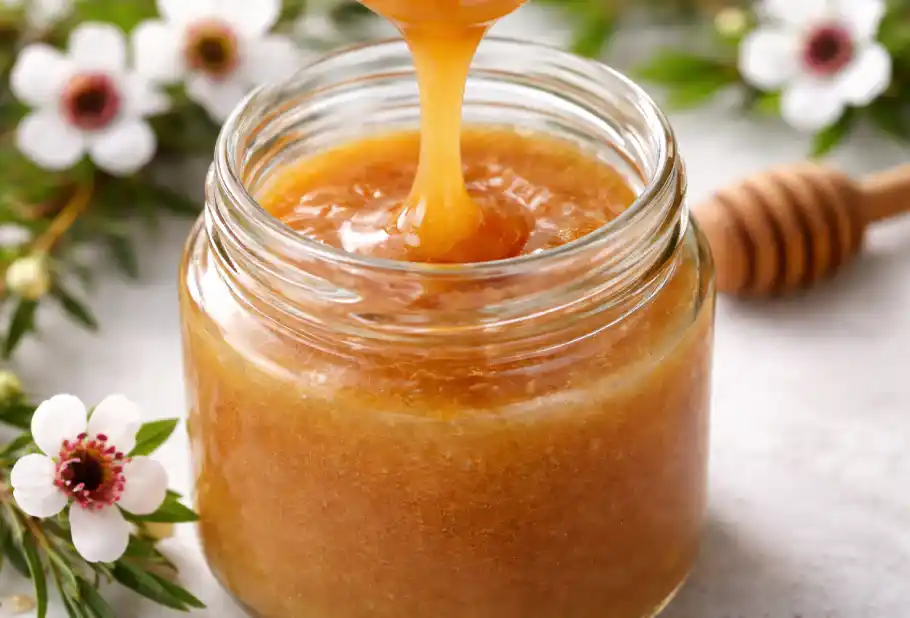
- Color: It’s not clear and yellow, but rather closer to a dark amber or caramel color.
- Texture: Rather than a fluid liquid, it has a more viscous, “thixotropic” structure (it liquefies when stirred and gels when left standing).
- Taste: Instead of the overly sweet taste of classic honeys, it has a more earthy, slightly bitter, herbal, and woody aroma. This characteristic taste it leaves on the palate is evidence of its high mineral and phenolic compound content.
Scientifically Proven Benefits of Manuka Honey
Research on Manuka honey reveals how this natural miracle has healing effects on various systems of the body. Here are the key benefits that make Manuka honey a powerful natural supporter of modern healthy living routines:
Immune System Boosting and Natural Antibiotic Effect
During winter months or seasonal changes, the body’s defense mechanisms weaken. Manuka honey helps the body respond more quickly to infections by stimulating immune cells (cytokines). Consuming a spoonful of Manuka honey when you have a sore throat not only soothes the throat but also directly fights the bacteria causing the pain.
Digestive System Health: Support for Gastritis and Reflux
The stress and irregular eating habits of modern life trigger stomach problems. Manuka honey’s greatest success on stomach health is its suppressive effect on the Helicobacter pylori bacteria, which leads to stomach ulcers and gastritis. Thanks to its prebiotic properties, it also nourishes beneficial bacteria in the gut, helping to alleviate bloating and reflux symptoms.
A Revolution in Skincare: Acne and Wound Healing Properties
Manuka honey, considered “medical-grade honey,” is used in hospitals for burn and wound care.
- Acne: Thanks to its low pH level, it maintains the skin’s acid balance and prevents acne formation by cleansing bacteria from pores.
- Wound Healing: When applied to wounds, it creates a moist barrier, accelerates tissue repair, and reduces inflammation. A soothing effect has also been observed in chronic skin conditions such as eczema and psoriasis.
Effects on Oral and Dental Health
Honey is often thought to be harmful to teeth because it is a sugary food. However, Manuka honey is an exception. Studies show that Manuka honey, which is high in MGO, reduces plaque formation, protects against gum recession (gingivitis), and eliminates harmful bacteria in the mouth. Despite containing sugar, its antibacterial power prevents decay-causing bacteria.
Label Reading Guide: What Do UMF and MGO Values Mean?
When buying Manuka honey, you’ll see phrases like “MGO 400+” or “UMF 15+” on the label. These abbreviations are not just numerical values; they are certifications indicating the honey’s quality and biological activity. Let’s provide a clear explanation for the question that most confuses consumers: “What is the difference between MGO and UMF in Manuka honey?”
What is the UMF (Unique Manuka Factor) Rating?
UMF is the most comprehensive certification awarded by the New Zealand Manuka Honey Association (UMHA). For honey to receive the UMF label, it must contain the following four essential components in the correct proportions:
Leptosperin: A DNA marker found only in Manuka nectar, proving the honey’s authenticity.
DHA: A precursor substance that converts to MGO.
MGO: The main antibacterial agent.
HMF: A purity indicator showing whether the honey has been heated or is fresh.
The UMF rating (such as 5+, 10+, 20+) measures the overall quality of the honey.
Differences Between MGO Values: Which Value is Used for What?
The MGO system only measures the amount of methylglyoxal. For example, MGO 250+ means that there are at least 250 mg of methylglyoxal in one kilogram of honey.
- MGO 30+ / 100+ (Low Activity): Used as a daily nutritional supplement to provide energy.
- MGO 250+ / UMF 10+ (Medium Activity): Ideal for supporting immunity and regulating the digestive system.
- MGO 400+ / UMF 13+ (High Activity): Therapeutic use. Recommended for throat infections, stomach problems, and skin care.
- MGO 550+ / UMF 15+ and above (Maximum Strength): Preferred for acute conditions, deep wounds, and fighting chronic infections.
Comparison Between Manuka Honey and Regular Honey
Many people rightly ask: “Why is Manuka honey expensive?”. Let’s take a look at the comparison below to understand the difference:
| Feature | Normal Honey | Manuka Honey |
| Main Component | Glucose/Fructose | Methylglyoxal (MGO) |
| Antibacterial Effect | Hydrogen Peroxide (Weak) | Non-Peroxide Activity (Strong) |
| Heat Resistance | Loses its properties with heat | Resistant to heat and light |
| Production Region | Worldwide | Only New Zealand and Australia |
| Harvest Period | Long (Throughout Spring and Summer) | Very short (2-6 weeks per year) |
| Price | Economical | High (Logistics and testing costs) |
Why is it more expensive? Because the Manuka flower blooms for only a very short time. Helicopters are often used to transport the beehives to these rugged and remote areas. Also, each jar undergoes expensive testing and certification in New Zealand laboratories. Supply is very low, while demand is global.
How to Consume Manuka Honey? Daily Usage Recommendations
To maximize the benefits of manuka honey, how you consume it is important. Consuming it haphazardly can lead to waste of this valuable resource. It should be considered not just an ordinary breakfast item, but a natural therapeutic method that supports your body.
Direct Consumption or Mixture?
To get the maximum benefit, Manuka honey should be consumed directly by the spoonful. A teaspoon of honey taken on an empty stomach in the morning coats the stomach lining and protects the digestive system.
- How much Manuka honey should be consumed daily? For general health support, 1-2 teaspoons per day is sufficient. In case of an acute infection, this dose can be increased to 3-4 teaspoons.
- If the taste is too strong, you can mix it with warm water or herbal tea. However, adding it to yogurt or smoothies is also a popular method of consumption.
Temperature Limit to Consider When Using Honey
Never put Manuka honey in boiling water. Although MGO is more heat-resistant than regular honey, temperatures above 40-45 degrees Celsius can destroy the live enzymes and other sensitive nutrients in the honey. If you are going to add it to your tea, wait until the tea has cooled to a drinkable temperature.
Nature’s Purest Form on Your Table with Cahter Organic
At Cahter Organic, we bring you the finest bee products in their purest form, free from any heat treatment or additives, and whose quality is certified by analysis reports. Discover our products today to support your health with the essence of nature and experience reliable, 100% natural bee products; experience the power of nature with the assurance of Cahter Organic.