Among traditional blends prepared with natural ingredients, honey and ginger stands out, known as a powerful immune booster, especially during seasonal changes. So, “How is honey and ginger made?” and “What are the benefits of honey and ginger?” In this article, we comprehensively cover both its preparation and effects.
Step-by-Step Guide to Preparing Honey and Ginger Dessert
To get the most benefit from these two powerful natural remedies, you need to follow the right steps. By preserving the naturalness of honey and the effectiveness of ginger, you too can prepare a healthy mixture in your own kitchen.
Choosing the Right Ingredients: Fresh Ginger or Powdered Ginger?
The type of ginger chosen when preparing honeyed ginger determines both the taste and the effect of the mixture. Fresh ginger root offers a more aromatic and vibrant character thanks to its volatile components. When grated or thinly sliced, it releases its own juices into the honey, and the mixture gradually becomes more fluid. Those who want to prepare honeyed ginger, especially to soothe a throat or treat a cough, usually prefer the fresh form.
Powdered ginger, on the other hand, is a more practical option. Because it doesn’t contain water, it doesn’t alter the consistency of the honey and may have a sharper taste. It can also provide a more stable structure in mixtures that will be stored for a long time. However, if a fresher and more intense aroma is desired, fresh ginger root is often a more suitable choice.
The Most Effective Mixing Ratios: How to Balance Honey and Ginger?
The most important point when preparing honey and ginger is finding the right ratio. If you are using fresh ginger, adding about two to three tablespoons of grated ginger to 250 grams of natural honey is sufficient. This amount ensures that the taste remains balanced and the ginger’s aroma is distinctly felt in the honey.
If powdered ginger is preferred, the amount should be less. Usually one to one and a half teaspoons is enough. More can make the mixture too strong and upset the stomach.
Preparation Steps: Resting and Storage Conditions in a Jar
Place grated or thinly sliced ginger in a clean, completely dry glass jar. Slowly add natural honey, ensuring the ginger is completely submerged. Use a wooden spoon when combining the ingredients to avoid affecting the pH and enzyme structure of the honey.
After preparing the mixture, close the lid and let it sit in a dark place for at least 24 hours. During this time, the aroma and essence of the ginger will begin to infuse into the honey. If you prefer a more intense flavor, you can let it rest for a few more days.
Since fresh ginger contains water, it is best to store this honey and ginger mixture in the refrigerator. It is generally recommended to consume it within two to three weeks. Mixtures prepared with powdered ginger can last longer at room temperature in a cool, dark place.
Key Effects of Honey and Ginger Mixture on the Body
The natural enzymes, minerals, and organic components found in honey, combined with the aromatic properties of ginger, create a supportive effect on the body. These two powerful ingredients are often preferred together, especially during colds.
When consumed regularly and in moderation, honey and ginger can support the body’s natural defense mechanisms. It helps soothe the throat, relieves the digestive system, and generally provides a more balanced feeling of energy.
A Natural Antibiotic: How Does it Strengthen the Immune System?
The components in ginger, such as gingerol and shogaol, when combined with the natural properties of honey, create a mixture that supports the immune system. Honey and ginger, especially preferred during seasonal changes, can contribute to the body’s increased resistance to external factors.
When consumed regularly and in moderation, the benefits of honey and ginger include supporting body resistance, stimulating blood circulation, and aiding in the overall recovery process. Thanks to its antioxidant components, it can play a protective role against free radicals. Therefore, it can be used not only during illness but also for preventative purposes.
Respiratory Tract Relief: Effects on Cough and Sore Throat
Coughing is one of the most common problems during the winter months. In this regard, honey and ginger is one of the most traditionally used natural remedies for coughs. Honey helps reduce irritation by coating the throat. This protective effect can provide relief, especially for dry coughs.
Ginger, on the other hand, is known for its respiratory support properties. When consumed with warm water, it soothes the throat and can contribute to easier breathing. In coughs with phlegm, the soothing effect of honey and the supportive properties of ginger work together to provide relief.
Digestion-Friendly: Its Role in Relieving Nausea and Indigestion
Honey and ginger is a preferred mixture not only for immunity but also for the digestive system. Ginger is known for its ability to support stomach movements. Therefore, it can help reduce bloating and indigestion after heavy meals.
It can be consumed in small amounts, especially for nausea experienced during travel or mild stomach discomfort in the mornings. Honey, on the other hand, softens the stomach, balancing the effect of ginger and providing a more comfortable experience.
When consumed regularly and in moderation, it can contribute to a more balanced digestion. However, it is important for people with chronic stomach problems to consult a specialist before use.
Variations That Make Honey Ginger Even More Powerful
While honey ginger is an effective mixture on its own, it can be enriched with different natural ingredients. The rich and protective nature of honey balances the aroma and effect of the other added ingredients. This results in a mixture that is both delicious and can be used for a wider variety of purposes.
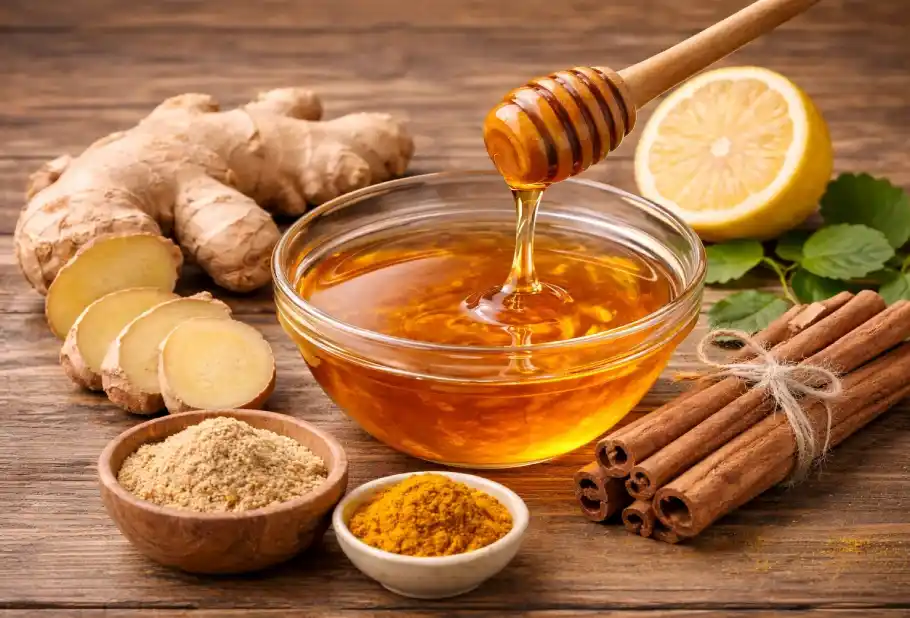
When ingredients like lemon, black pepper, cinnamon, or turmeric are added in the right proportions, honey ginger goes beyond simply offering immune support; it becomes a more comprehensive natural supplement that can be used for different needs. The important thing here is to use each ingredient in moderation and maintain the basic balance.
Vitamin C Supplement: Honey, Ginger, and Lemon Mixture
Adding freshly squeezed lemon juice to a honey and ginger mixture is a popular method, especially during seasonal changes. Lemon, with its vitamin C content, supports the immune system, while honey balances the sharp taste of the lemon, making the mixture milder.
This combination can also be used when treating coughs with honey and ginger. Adding a teaspoon of honey and ginger and a few drops of lemon juice to warm water can help soothe a sore throat. Especially when consumed at the first signs of a cold, it can support the body’s recovery process.
The lemon juice must be freshly squeezed, and the mixture should not be added to boiling water. This preserves the natural properties of both honey and lemon.
Anti-inflammatory Power: Honey and Ginger with Turmeric
Adding a pinch of turmeric to a honey and ginger mixture offers a unique alternative, especially for those who work intensely or exercise regularly. The curcumin in turmeric, when used in conjunction with ginger’s natural components, can help reduce sensitivity in the body.
This combination can help alleviate temporary discomfort in joints and muscles. It can also contribute to the recovery process after intense physical activity. A pinch of turmeric is usually sufficient; too much might mask the taste.
Metabolism Booster: Adding Black Pepper and Cinnamon
Adding a small amount of black pepper and cinnamon to the honey and ginger mixture enhances the flavor and offers a different use. The piperine in black pepper can help increase the absorption of some components, especially in mixtures using turmeric. Therefore, spices are generally used in small amounts and in moderation.
Cinnamon, on the other hand, softens the mixture with its aroma and can help maintain more stable blood sugar levels. This contributes to a more controlled digestion of the honey’s natural sugar content. When consumed with warm water, it can provide a warming sensation, especially in cold weather.
When and How Should Honey and Ginger Mixture Be Consumed?
The timing and method of consumption are the most important factors determining how quickly and effectively the mixture will be absorbed by the body. Incorrect application can lead to the loss of the delicate enzymes in the honey; however, correct timing helps the benefits of honey and ginger to manifest more effectively.
Benefits of Consuming Ginger with Honey on an Empty Stomach in the Morning
Consuming a spoonful of ginger with honey on an empty stomach in the morning can help the digestive system start the day more easily. The stomach, having rested overnight, tolerates this mixture more easily. Ginger supports digestion, while honey soothes the stomach.
When consumed on an empty stomach, the body can absorb the components more quickly. This can provide a more balanced energy level throughout the day. Regular use can contribute to reducing problems such as indigestion and bloating.
Use Before Bedtime: Sleep Quality and Respiration
For conditions like increased nighttime coughs and nasal congestion during seasonal changes, honey and ginger can be a good choice in the evening. Especially for coughs, consuming honey and ginger about 30-45 minutes before bedtime can help soothe the throat. This helps reduce irritation throughout the night.
Honey’s natural properties create a protective layer in the throat, while ginger contributes to relieving respiratory discomfort. Its effect is milder when consumed with warm water. Regular and moderate use at night can support a more restful sleep.
As a Tea or by the Spoon? The Best Way to Consume It
In its simplest form, honey and ginger can be consumed slowly, about a teaspoonful. This method allows the mixture to come into direct contact with the throat, and a more intense effect can be felt, especially when honey and ginger are used for coughs.
For those who want to consume it as a drink, the water temperature is important. When honey is exposed to high heat, some of its sensitive components can be damaged. Therefore, lukewarm water should be preferred instead of boiling water. A mixture prepared with lukewarm water provides a smoother taste and helps soothe the throat.
Honey and Ginger Side Effects and Precautions
Although honey and ginger are a treasure trove of health benefits, the powerful active ingredients in them can cause different reactions in some individuals. To safely incorporate this mixture into your routine, it’s important to know the potential risks and usage limits.
Warnings for Those with Sensitive Stomachs
Although honey and ginger is a natural mixture, it may not be suitable for everyone. The strong aroma of ginger can cause stomach sensitivity in some people. The burning sensation may increase, especially in those with gastritis, ulcers, or severe reflux.
If you have this type of sensitivity, it may be better to try the mixture after a light meal rather than on an empty stomach. It’s important to start with a small amount and observe your body’s reaction. Individuals who experience chronic stomach discomfort should consult a specialist before regular use.
Who Shouldn’t Consume It? (Infants Under 1 Year Old and Drug Interactions)
No mixture containing honey should be given to infants under one year old. Honey, by its natural composition, may contain some spores, and while this may not cause problems in adults, infants’ digestive systems are not yet fully developed to handle these microorganisms. Therefore, all honey-based products, including honey and ginger for coughs, should not be used in children under one year old.
In addition, people taking regular medication should be cautious. Ginger should be used carefully when consumed with blood-thinning medications, as it may increase the risk of bleeding. For individuals taking diabetes or blood pressure medication, the natural sugar content of honey and the effects of ginger on circulation should be considered. In these cases, consulting a doctor before regular consumption is the safest approach.
What is the Safe Daily Intake?
It’s important to be moderate when consuming honey and ginger. For adults in good general health, 1 to 2 teaspoons per day is usually sufficient. More than that can upset the stomach and lead to unnecessary calorie intake.
It’s important to remember that honey, although natural, contains sugar. Therefore, the total amount of sugar in your daily diet should be considered. Those trying it for the first time can start with small amounts and observe how their body reacts. For regular use, avoiding excess is the safest approach.
Bring Nature’s Healing Power to Your Table
To truly benefit from a honey and ginger mixture, the quality of the honey used is crucial. Natural, additive-free, and unheated honey makes a difference in both taste and content.
If you want to experience this difference, you can discover Cahter Organik’s raw honey varieties produced in the Siirt highlands. Bring the aroma and naturalness derived from the rich flora to your table; prepare your honey and ginger recipes with confidence.
Frequently Asked Questions
Can powdered ginger be mixed with honey and left to sit?
Yes, powdered ginger can be mixed with honey and left to sit. The fact that the powder form doesn’t contain water extends the shelf life of the mixture compared to fresh ginger. To allow the enzymes and aroma to fully infuse, it’s sufficient to let it rest for one day in a dark place at room temperature.
Does the honey and ginger mixture spoil?
Although honey is a natural preservative, the water in fresh ginger can cause fermentation (sourness) over time. It is recommended to consume the fresh ginger mixture within 1 month, and the powdered ginger mixture within 3-4 months in a cool place. An alcoholic smell or excessive bubbling is a sign of spoilage.
Is honey and ginger safe to consume during pregnancy?
It is generally safe; honey and ginger are frequently preferred, especially for morning sickness and coughs. However, due to ginger’s stimulating effect, the daily limit of 1 gram (approximately 1 teaspoon of the mixture) should not be exceeded. In cases of high-risk pregnancy or diabetes, medical approval must be obtained.