Bee stings usually result in temporary pain and redness, but if not treated correctly, they can develop into severe swelling that disrupts your daily routine. Taking the first steps without panicking is crucial to alleviate the pain and reduce the effects of the stinger remaining under the skin. In this guide, we’ve compiled all the details you need to know, from natural methods to relieve pain after a bee sting to practical first aid steps you can apply at home.
What to Do First When You Get Stung by a Bee: 3 Critical Steps
When you are stung by a bee, you are faced with a defense mechanism that kicks in within seconds. Putting aside panic and acting in the correct order at this moment makes a big difference in preventing the venom from spreading further throughout the body. Before intervening, make sure your hands are clean and immediately follow the basic steps below.
Why is Removing a Bee Sting Important?
If it’s a honey bee that stung you, it usually leaves its stinger in the skin. At the tip of this stinger is a small sac that continues to contract, pumping venom under the skin. So, “How do you remove a bee stinger?”
You should never squeeze the stinger with your fingers or use tweezers, as this pressure will burst the venom sac, causing all the contents to enter the body. Instead, gently scraping the stinger out of the skin with your fingernail is the healthiest way to prevent further spread of venom.
Clean the Area with Soap and Water
Another step after removing the stinger is to disinfect the area. The bee sting is actually a small hole in the skin barrier, and this hole is vulnerable to infection. Gently washing the area with cold water and mild soap will both soothe the skin and prevent potential bacterial entry. This simple cleaning process should not be neglected to reduce the risk of excessive redness and inflammation later on.
Ice Application: Relieve Swelling and Pain
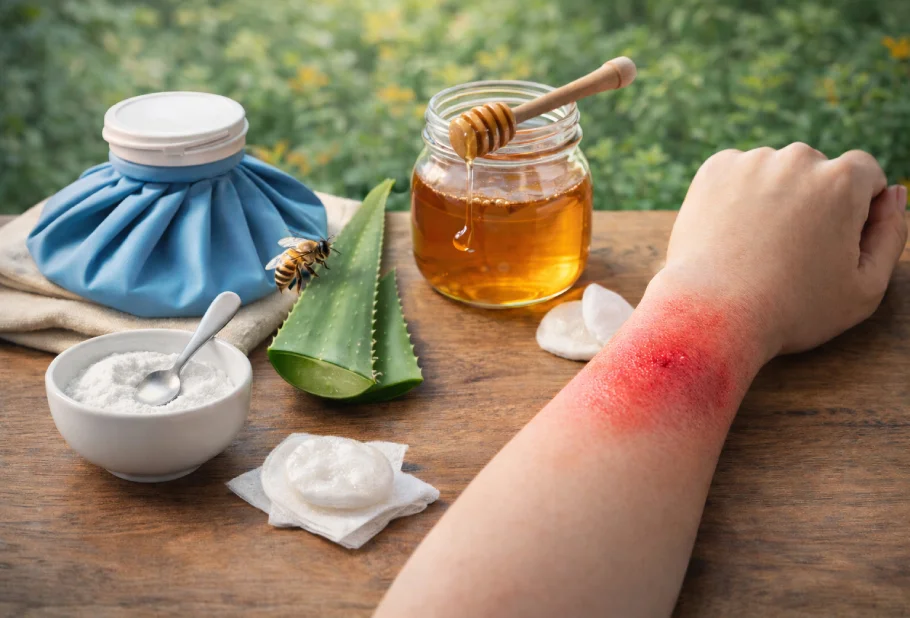
After cleaning, apply cold to relieve pain and control swelling. Gently pressing an ice pack wrapped in a cloth to the area for 10-15 minutes will slow blood flow. This method is the quickest and most natural answer to the question “How to reduce swelling from a bee sting?”. Thanks to ice application, both the burning sensation is reduced and the growth of edema under the tissue is limited.
What are the best home remedies for bee stings? Natural solutions.
Responding to these minor natural inconveniences with solutions offered by nature itself is the healthiest way to soothe the skin without stressing it. These methods aim to support the skin’s self-repair process while minimizing the stinging and discomfort felt.
Baking Soda and Water Mixture (Acid Balance)
Since bee venom has an acidic structure, neutralizing it with an alkaline substance quickly relieves the pain. Mixing a teaspoon of baking soda with a few drops of water to form a paste and applying it to the stung area is quite effective in soothing the burning sensation. You can lessen the effect of the venom by leaving this mixture on your skin for 10-15 minutes.
The Soothing and Healing Power of Honey
Honey, the most valuable miracle offered to us by bees, can also be used to soothe the irritation that develops after a bee sting. Honey’s natural antibacterial properties and tissue-repairing structure contribute to faster healing of the stung area. Gently applying some honey to the area moisturizes the skin and reduces the feeling of tightness. Honey’s cooling and calming effect is a great choice for naturally softening the body’s inflammatory response.
Reducing Itching with Apple Cider Vinegar
One of the most common complaints when the healing process begins is persistent itching. Soaking a cotton ball in apple cider vinegar and gently pressing it onto the affected area for a few minutes will reduce itching thanks to the acidic nature of the vinegar. Vinegar also helps reduce swelling and soothe the skin by balancing blood flow in the area.
Aloe Vera Gel: Skin Repairing Effect
Aloe vera, one of nature’s most powerful skin soothing agents, is an excellent aid in relieving irritation after a bee sting. The transparent gel obtained from the plant’s leaves creates an immediate cooling sensation in the applied area, relieving the burning feeling. It also supports the rapid healing of tissue damage thanks to its repairing components.
Toothpaste Application (A Traditional Method)
One of the first methods many people resort to at home is applying toothpaste, which is actually based on the principle of neutralizing bee venom. Since most toothpastes are alkaline, they can help reduce the effect of the acidic nature of bee venom. Applying a small amount of toothpaste to the stung area and leaving it for a while can relieve the stinging sensation and suppress swelling. However, when using this method, it’s a good precaution to ensure the paste isn’t excessively minty or perfumed, in order to avoid further skin irritation.
How Long Does Bee Sting Swelling and Itching Last?
Many people wonder when the symptoms that appear immediately after a sting will return to normal. These symptoms, which usually peak within the first few hours, gradually begin to subside with the right interventions. However, it may take several days for the body to completely resolve this biological response.
Normal Reactions and Healing Process
In a standard bee sting, the pain and burning sensation usually subside into a mild ache within a few hours. While methods like applying ice to reduce swelling can speed up this process, mild swelling lasting 2 to 3 days is considered normal. Itching usually reaches its peak around the second day and subsides on its own as the tissue in the area repairs itself. Avoiding irritation and using natural soothing agents during this process ensures complete healing in less than a week.
What to Do About Persistent Swelling?
If the swelling doesn’t decrease after 3-4 days, or if it spreads, or if there is an excessive increase in heat in the area, caution is advised. If itching is replaced by throbbing pain, it may indicate an infection. Furthermore, seeking professional help for excessively large local reactions around the sting area will help keep the process under control.
When is a Bee Sting Dangerous? (Allergy Warnings)
Sensitivity to bee venom varies greatly from person to person. While some bodies quickly neutralize the venom, for others even a single sting can trigger a process affecting the entire body system. Those who have previously experienced severe reactions to bee stings should be especially careful.
What is Anaphylaxis? Symptoms Requiring Emergency Intervention
Anaphylaxis is the most severe and rapid allergic reaction the body has to bee venom. Appearing within minutes of a sting, it requires immediate medical attention. Symptoms of bee allergy include shortness of breath, wheezing, swelling in the throat or tongue, difficulty swallowing, rapid pulse, and a sudden drop in blood pressure. If widespread hives or excessive facial swelling occur far from the sting site, this indicates a systemic reaction and requires immediate medical attention.
Which Areas Are More Risky to Be Stung? (Mouth, Throat, Eyes)
The location of the sting sometimes determines the risk level, regardless of whether there is an allergy. Stings in areas such as the inside of the mouth, tongue, or throat are always dangerous because the resulting natural swelling can obstruct the airway. Similarly, sensitive tissues such as the area around the eyes and eyelids require professional examination due to the risk of permanent damage. Seeing a specialist immediately after taking first aid steps for bee stings in such sensitive areas ensures that the swelling that may develop is kept under control.
Which Areas Are More Risky to Be Stung? (Mouth, Throat, Eyes)
The location of the sting sometimes determines the risk level, regardless of whether there is an allergy. Stings in areas such as the inside of the mouth, tongue, or throat are always dangerous because the resulting natural swelling can obstruct the airway. Similarly, sensitive tissues such as the area around the eyes and eyelids require professional examination due to the risk of permanent damage. Seeing a specialist immediately after taking first aid steps for bee stings in such sensitive areas ensures that the swelling that may develop is kept under control.
Intervention Differences Based on Bee Species
Not all bees we encounter in nature have the same defense mechanism. Before intervening, quickly identifying the species of bee that stung us determines the effectiveness of the first aid to be applied. For example, there are significant differences in both the level of pain and the structure of the stinger between an attack by a honey bee and a sting from a wasp, a predatory species.
Honey Bee or Wasp?
Honey bees usually only sting once because they leave their stingers under the skin. The first and most important thing to do when stung by a honey bee is to remove the stinger from the skin immediately but with the correct technique, because the venom sac at the tip of the stinger continues to pump venom into the body until you remove it. After removing the stinger by scraping away only the edges without squeezing it with your finger, you should immediately wash the area with cold water.
On the other hand, wasps and yellowjacket hornets have the capacity to sting multiple times because they can retract their stingers and usually don’t leave a stinger on the skin. Wasp venom has a more complex structure and generally creates a more intense burning sensation. If you don’t see a stinger on the skin but the pain and burning are very intense, you are most likely dealing with a predatory species. In this case, you should proceed much faster with cold application and cleaning steps without wasting time searching for the stinger.
What to do in case of multiple bee stings
Sometimes, instead of a single bee sting, multiple stings can occur as a result of entering the defense area of a colony. As the total amount of venom entering the body increases, the body may exhibit a generalized toxic reaction even if the person is not allergic. In cases of multiple stings, symptoms such as dizziness, diarrhea, or vomiting should be monitored. If the number of stings is high, instead of waiting for home treatments, it is safest to seek support from a healthcare professional to monitor how the body copes with the situation.
Discover True Healing at its Source
At Cahter Organik, with a production philosophy that respects the awe-inspiring labor of bees and the pure cycle of nature, we bring the healing power of these unique creatures to your table in its most natural form. To discover our raw honeys and bee products, prepared while preserving the balance of nature, and to experience purity at its source, you can browse our products.