Prepared with great care in the heart of nature, deep within the hive, royal jelly is one of the most vital nutrients ensuring the continuity of bee colonies. This life elixir, produced by worker bees through a miraculous biological transformation, is the sole source to which the queen bee owes her strength and longevity. However, bringing this pure and precious essence from the privacy of the hive to the table requires a patient and technical journey of expertise where traditional mastery blends with scientific precision.
A Natural Support for Healthy Living
Discover one of the purest nutritional supplements nature has to offer with Cahter Organik Royal Jelly. Provide robust support to your health with its high nutritional value, antioxidant richness, and contributions to the immune system. Order now and take the first step toward a healthy life!
What is Royal Jelly and How is It Formed?
Royal jelly is a gelatinous, creamy white, and highly nutritious substance secreted from the hypopharyngeal glands of young worker bees. This substance serves as the initial three-day food source for all larvae in a honeybee colony; however, only the larvae selected to become queen candidates continue to feed exclusively on this jelly throughout their lives. Packed with rich proteins, fatty acids, vitamins, and minerals, this special secretion is biologically highly active. For bees to produce this jelly, they must consume large amounts of pollen and nectar to reach a high energy level.
How do worker bees produce royal jelly?
Young worker bees in the colony aged between 5 and 15 days serve as “nurse bees,” a period during which the glands in their head region are at their most active. After feeding on pollen, these bees secrete this highly nutritious white liquid from their hypopharyngeal glands. The physiological capacity of these young bees and the food stock of the hive form the foundation of the frequently wondered question: “How is royal jelly produced?” This produced liquid is deposited next to the larvae in the comb cells, enabling their rapid development.
The continuity of the process directly depends on the young bee population in the hive and the amount of fresh pollen brought in from outside. Nurse bees carry out this production non-stop to guarantee the future of the hive. This production is entirely shaped by a natural instinct. This biochemical transformation occurring within the bodies of bees is considered one of the purest forms of animal production in the world.
Why is it so important for the queen bee?
The fundamental difference between a queen bee and a worker bee lies in the quality of the nutrients they consume during their development stage. Genetically identical to worker bees, a queen bee candidate grows to be twice the size of other bees simply because she is fed exclusively on royal jelly. Thanks to this special diet, the queen bee gains a reproductive capacity to lay thousands of eggs a day and a lifespan far longer than other bees. While worker bees live for only a few weeks, the queen bee’s ability to live for years stands as proof of the miraculous power of this jelly.
The continuity of the hive depends on the queen bee, and the quality of the queen is measured by the abundance of the jelly she consumes. This liquid flawlessly manages not only the queen bee’s physical size but also her hormonal balance. Without royal jelly, it is biologically impossible for a queen bee to rule the hive or sustain a healthy generation. For this reason, bees rear their queen candidates in special chambers containing a plentiful supply of this jelly.
How is Royal Jelly Harvested? (The Core Process)
Royal jelly production is based on the principle of human guidance over the bees’ instinct to rear queens. Beekeepers either temporarily remove the queen from the hive or make the bees believe they are queenless, prompting them to build numerous queen cells (cups). The goal is to have worker bees fill these special cells to the brim with jelly. Each of these technical stages involves highly sensitive interventions carried out without disrupting the balance of nature.
Larvae selection and preparation of queen cups
The first step of production is arranging artificial or natural queen cells, called “cups,” onto a frame. Very tiny worker bee larvae that are only 12 to 24 hours old are placed inside these cups. This process is called “grafting,” and for a successful production, it is vital that the larvae are extremely young and healthy. During the larvae transfer, the humidity and temperature balance of the environment must be meticulously maintained to prevent the larvae from drying out.
These prepared cups are placed into hives dense with nurse bees, ensuring that the bees perceive these larvae as “new queen candidates.” To feed these candidates, the bees quickly begin to fill the cups with high-quality jelly. This stage is a critical starting point that maximizes the biological motivation of the hive. The cleanliness of the cups and the way the larvae are placed directly affect the amount of jelly to be harvested.
The royal jelly production process by worker bees
The nurse bees tasked with feeding the larvae placed in the hive show much more interest in these special cells than in normal honeycomb cells. When a larva is viewed as a queen candidate, nurse bees fill the cell she is in to the brim with this precious liquid. This intense royal jelly production occurs by channeling all the resources of the hive into these cells. Bees leave their highest quality secretions inside these cells for the development of the larvae.
This performance of the nurse bees progresses in sync with the flow of pollen and nectar coming from outside. Bees adopt these artificial cups just like their natural cells, taking production to its peak. During this process, the division of labor within the hive is entirely structured around keeping the queen candidates alive.
Collecting royal jelly from the cells
The 72-hour period following the placement of the cups inside the hive represents the most ideal and critical “golden hours” for the harvesting process to begin. This time frame is meticulously tracked by beekeepers because it is the phase when the amount of jelly inside the cell reaches its highest peak in terms of volume and nutritional value. If the harvest time is kept too early, the yield remains quite low; if the duration is exceeded, the growing larva rapidly begins to consume the jelly, leading to a decrease in the product.
During collection, which is the final and most sensitive stage of the process, the tiny larvae inside the cells are removed with great care, and then the remaining pure extract is drawn out using special vacuum systems. To protect the acidic structure and biological values of the jelly, metal contact is strictly avoided at every step of this process. The collected products are transferred into special containers that will not lose their properties under sterile conditions isolated from external factors, and are immediately put under protection.
Royal Jelly Production Stages (Step-by-Step)
In modern facilities and professional apiaries, royal jelly production is carried out within a specific calendar and discipline. These stages aim to turn accidental production in nature into a controlled and high-yield process. Each step is planned considering the welfare of the bees, and maximum care is given to hygiene standards.
Preparing the hive for production
Before production begins, the selected hives must possess a very strong worker bee population. Beekeepers trigger the worker bees’ instinct to produce a new queen by separating the queen bee in the hive with a divider or leaving the hive “queenless.” In this preparation phase, hives are supported with supplementary nutrients to increase the bees’ jelly secretion capacities.
The internal arrangement, ventilation, and humidity rate of the hive are brought to the most ideal conditions for production. A strong hive barbors thousands of nurse bees, so production efficiency is correspondingly high. At this stage, efforts are made to keep the stress level of the bees low; because a peaceful colony produces higher quality secretion.
Larvae transfer (The grafting process)
The grafting process involves taking larvae from honeycomb cells and placing them into queen cups using special transfer needles. Professional manual labor is required to ensure that the larvae are not damaged or dried out during this process. This is absolutely the most technical and care-demanding stage in the process of how royal jelly is obtained. A mistakenly executed transfer results in the bees rejecting that cup and the failure of production.
The transferred larvae are attached to frames placed in the warm central zone of the hive. Beekeepers usually perform this process in closed and humid environments to protect against external factors. Dozens of cups can be attached to a single frame, and these frames are placed into production hives. This step can also be described as the “seeding” stage of production and requires immense patience.
The 72-hour production phase
Once the larvae are placed in the hive, a 3-day period is anticipated for the bees to feed these cells. This 72-hour time frame is the most productive window for royal jelly production, during which the bees work non-stop. Beekeepers monitor hive entries and exits during this period and support the bees’ energy by syrup-feeding when necessary. At the end of the duration, the cells fill with jelly, and the larvae virtually float on top of this jelly. If 72 hours are exceeded, the chemical composition of the jelly begins to change, and its quality drops.
Harvesting and storage conditions
When the harvest time comes, the frames are removed from the hive, and the bees on them are gently brushed off. The beeswax lids at the mouth of the cups are cut away, and the larvae inside are taken out with sterile tweezers. After the jelly is transferred into jars using vacuum devices or special spatulas, it is immediately dispatched to +4 or -18 degrees Celsius, protected from sunlight.
Royal jelly has such a sensitive structure that it can lose its properties within a few hours at room temperature. For this reason, it is of great importance that the harvest site is close to the hives and hygienic. Preventing its contact with air during storage is a key requirement to avoid oxidation. A correctly stored product can preserve all its functional components for a long time.
Why is Royal Jelly Production Difficult?
In the world of bee products, royal jelly undoubtedly sits at the top of the list in terms of the labor involved in its extraction and its unit cost. The difficulty of this production stems not only from requiring intense physical labor but also from being a high-precision process where every second and every millimeter is of vital importance. Truly, royal jelly production is the most artistic and technical dimension of beekeeping, conducted with the precision of a watchmaker, accepting not even the slightest error. This limited and rare opportunity offered by nature within its own boundaries makes every single gram of the jelly a much more valuable and exclusive health support.
Low production volume
The amount of royal jelly obtained from a hive is incredibly small compared to honey or pollen. Only a few hundred grams of jelly can be obtained from a strong hive in a season, which means processing thousands of cups one by one. The milligram doses obtained from each cell during royal jelly production demonstrate how much patience this production requires. This limited quantity is the primary element determining the value and importance of the jelly in the market.
Businesses that want to produce in large quantities must manage thousands of hives simultaneously and with the same discipline. Processing each cup by hand makes it impossible to completely mechanize this production industrially. The intensity of human labor increases production costs while preserving the purity of the jelly.
Sensitive harvesting process
Surgical precision is required during harvesting to ensure that the jelly is not contaminated or spoiled in any way. It is essential that the equipment used during collection does not contain metal (being plastic or glass) so that the acidic structure of the jelly is not disrupted. The hidden hero behind the question of “how royal jelly is produced” is this hygienic and sensitive collection discipline. External factors such as dust, temperature, and humidity can lower the quality of the jelly within seconds.
Additionally, even the smallest error that may occur during the removal of larvae from the jelly can spoil its taste and quality. The vacuuming and bottling processes of the jelly must also be conducted with the same care and in a rapid manner. This sensitivity takes production to a level that requires expertise that not every beekeeper can perform. Sensitive process management is the most fundamental distinguishing feature of a quality product.
Special equipment and knowledge requirements
To produce royal jelly, grafting needles, magnifying glasses, transfer stands, and cooling units are required beyond standard beekeeping materials. However, just as important as the equipment is the beekeeper’s ability to read and apply biological processes. Royal jelly production makes it mandatory to follow the life cycle of bees hour by hour and determine the intervention time correctly. Lack of knowledge can cause the entire order of the hive to be disrupted and the yield to drop to zero.
The need for trained personnel and laboratory-type cleanliness conditions are other factors that make this production costly. The beekeeper’s eye coordination, hand dexterity, and patience directly determine the success of the production.
How to Identify Quality Royal Jelly?
One of the topics consumers struggle with most is understanding which of the products on the market is fresh and real. A quality product is a reflection of the meticulousness in the production stage and reveals itself through certain sensory characteristics. Real healing is found only in royal jelly that has been produced with the right method and preserved without spoiling.
Color, consistency, and scent characteristics
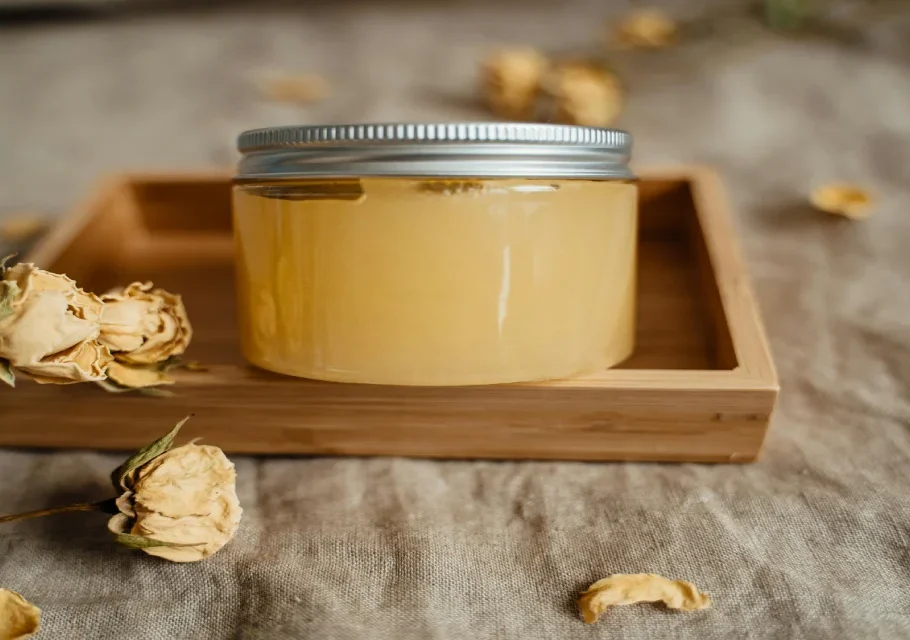
Real and fresh royal jelly has a tone between bright white and light cream; dull or yellowed products can be a sign of staling. Its consistency is smooth, gel-like, and fluid; it should not contain sediment or lumps inside. When you smell it, you should detect a sharp, slightly sour, and phenolic scent, which is the greatest proof of its freshness.
When tasted, an acidic and bitter flavor that leaves a slight burning sensation in the throat should come through. If the product is very sweet or has the taste of ordinary cream, honey or other substances may have been mixed into it.
The difference between fresh royal jelly and processed products
Apart from pure royal jelly, forms mixed with honey or made into capsules are also available on the market. Pure and fresh royal jelly must maintain its freshness from the moment it leaves the freezer and harbor no additives in its content. Products frozen immediately after royal jelly production concludes keep their biological activities at the highest level. In processed products, the treatments applied to extend the shelf life may weaken some properties of the jelly.
Lyophilized (freeze-dried) powder forms can be stored at room temperature thanks to the removal of their water, but they do not fully replace the fresh form. The most important criterion for the consumer is whether the product is delivered via a cold chain or not. Fresh jelly always offers a stronger effect, while blended products provide ease of use.
Support Your Natural Health with Cahter Organik Royal Jelly
Add Cahter Organik Royal Jelly to your natural nutrition habits and protect your health with natural vitamin and mineral support. Order now to ensure your immune system stays strong!
Frequently Asked Questions
How much royal jelly is obtained from 1 hive?
In a production period, an average of 200 to 500 grams of royal jelly can be obtained from a well-managed and very strong hive. This amount varies according to the strength of the hive, the flora of the region, and the number of production days. Royal jelly is highly valuable because its yield is this low.
How long does royal jelly take to spoil?
Pure royal jelly begins to spoil and lose its nutritional value within just a few hours when left at room temperature. It can preserve its freshness for up to 18-24 months in the freezer section of the refrigerator (at -18 degrees Celsius), and up to 6 months in the cooler section (at +4 degrees Celsius). Its contact with air and light must be kept to a minimum during storage.
Why is a metal spoon not used when collecting royal jelly?
Royal jelly has a very high acidity (low pH) and can react chemically when brought into contact with metal, disrupting its structure. This situation causes the minerals and enzymes inside the jelly to lose their effectiveness.
Why does the color of royal jelly change over time?
If royal jelly is exposed to light or not stored at the appropriate temperature, the oxidation process begins, and its color darkens, turning to a yellow-brown tone. Color change is usually a sign that the jelly has spoiled and its biological activity has ended. Fresh jelly must always be light-colored and bright.
Does producing royal jelly harm the bees?
When professional and ethical beekeeping methods are applied, royal jelly production does not harm the colony. Beekeepers produce simply by using the bees’ natural instinct to “swarm” or “supersede the queen.” As long as the nutrient balance of the hive is monitored, bees maintain this process as part of their natural life cycle.