Milk thistle, one of nature’s most resilient plants, transforms into a unique source of healing for our bodies thanks to the miraculous touch of bees. This special honey, reaching our tables from high-altitude plateaus, is not just a sweet treat; thanks to its silymarin content, it’s a powerful natural detoxifier supporting everything from liver health to skin regeneration. Let’s discover together the secrets of milk thistle honey, which protects your cells against the fatigue brought on by modern life.
What is Milk Thistle Honey and How is it Produced?
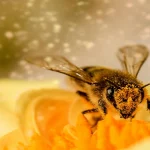
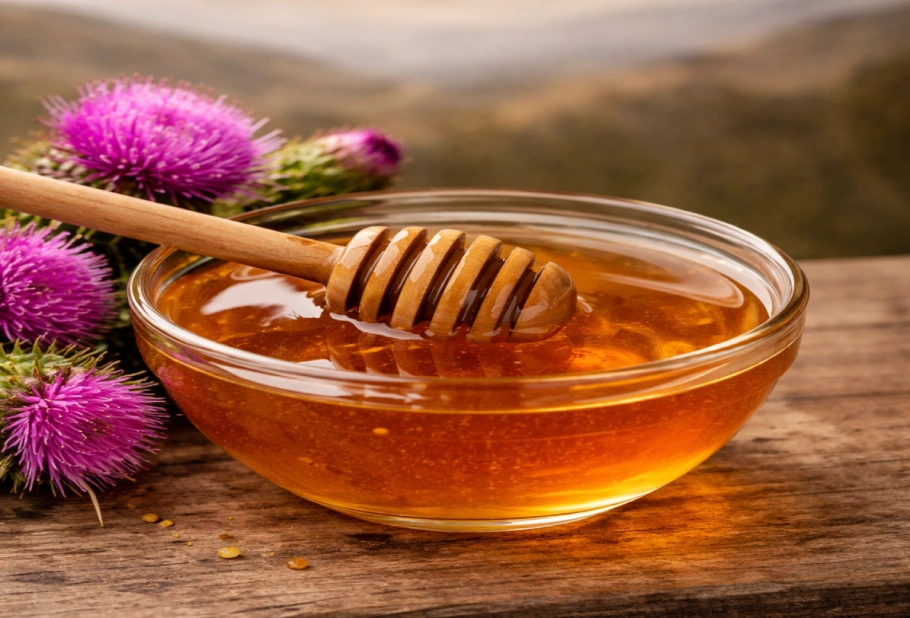
Milk thistle honey is a monofloral (single-flower source) honey produced by bees collecting nectar from naturally growing milk thistle (Silybum marianum) flowers. The honey production process takes place during the spring and summer months, the plant’s flowering period, particularly in high-altitude regions far from agricultural pesticides. Bees enrich the nectar from these thorny flowers with their own enzymes and carry it to the hives.
The most important production criterion for high-quality milk thistle honey is the “cold extraction” method. To preserve the delicate components of the honey, no heat treatment is applied during production; thus, the honey’s biological activity is kept at its highest level. Delivered to tables in its raw, “raw honey” form, it retains all its nutritional value.
Silybum marianum: Pure Energy from the Essence of a Medicinal Plant
Silybum marianum is an ancient plant that has held a place in medical history for thousands of years due to its supportive effects on liver health. The most fundamental component that distinguishes this plant from others is the flavonolignan group called “silymarin,” which is particularly concentrated in the seeds and flower extracts. Honey, blended by bees with the nectar of this medicinal plant, offers all this antioxidant capacity in a concentrated form.
Milk thistle honey is a pure energy source with a glucose and fructose balance that directly meets the energy needs of cells. However, what truly makes it a “superfood” is the synergy between the silymarin compound and the pollens and enzymes in the honey. Thanks to this synergy, the body receives the energy it needs while also providing biochemical support to the process of eliminating toxins.
Features that Distinguish Milk Thistle Honey from Other Flower Honeys
The most fundamental difference that distinguishes milk thistle honey from other honeys is its specific mineral profile and targeted effects. While exhibiting a softer, slightly woody and aromatic character in terms of taste profile, its color is generally in light amber tones. While many floral honeys offer general immune support, this particular honey creates a protective shield that focuses directly on the liver and digestive system.
With more stable enzyme activity compared to other honeys, milk thistle honey performs particularly well in activating digestive enzymes and regulating bile flow. When consumed in its unprocessed form, thanks to the live pollen it contains, it directly contributes to the metabolic renewal rate.
Effects on Liver Health: A Natural Detox Support
The liver performs over 500 vital functions, including purifying the blood of toxins, synthesizing proteins, and producing biochemicals necessary for digestion. In this comprehensive process, milk thistle honey is considered one of the natural options that support liver function.
Not just a food, but a functional supplement, this honey activates the body’s own detoxification mechanisms at the cellular level. Specifically, it helps reduce oxidative damage caused by free radicals by increasing the antioxidant capacity needed in the liver’s self-cleaning process.
Silymarin and Liver Cell Regeneration
Silymarin, found in the extract of the milk thistle plant and also present in honey, is a complex mixture of a group of flavonolignan compounds (silybin, silydianin, and silychristin). Silymarin’s most striking effect is its activation of the RNA polymerase I enzyme in the nucleus of hepatocytes, the liver cells. This activation accelerates ribosomal protein synthesis, allowing damaged liver cells to repair, or “regenerate,” much faster.
Furthermore, this component alters the structure of liver cell membranes, acting as a barrier that makes it difficult for external toxins (alcohol residues, heavy metals, chemical drugs) to enter the cells. This protective and reparative mechanism makes milk thistle honey a unique natural aid in chronic liver fatigue and tissue damage processes.
Milk Thistle Honey and its Contributions to Fatty Liver and Detoxification Process
Fatty liver disease (NAFLD), which is becoming increasingly common today as a result of processed food consumption and sedentary lifestyles, gradually restricts the organ’s functional capacity. Milk thistle honey’s benefits come into play precisely at this point, through its effect on regulating lipid (fat) metabolism. The natural acids and enzymes in the honey help suppress fat accumulation in the liver and support the process of converting existing fats into energy.
Milk thistle honey supports the production of glutathione, which is of great importance for the liver in the detoxification process. Glutathione is the body’s most powerful internal antioxidant, and milk thistle honey consumption accelerates blood purification by maintaining levels of this antioxidant. Thanks to its ability to stimulate bile flow, it facilitates the elimination of waste from the digestive tract, thus creating a holistic detox effect in the body.
The Unknown Benefits of Milk Thistle Honey for the Body
The biochemical structure of milk thistle honey exerts restorative and regulatory effects on many systems of the body. Its rare enzymes and plant-based polyphenols act like a “smart food,” regulating metabolic processes. With a wide range of effects from skin health and cell protection to energy metabolism and hormonal balance, milk thistle honey increases the body’s resistance capacity against chronic fatigue and oxidative damage caused by modern life.
Regulating Digestive System and Gallbladder Functions
The efficient functioning of the digestive system is directly related to the regular emptying of the gallbladder and the quality of bile acids. Milk thistle honey, with its “cholagogue” (bile-stimulating) effect, helps cleanse the bile ducts and increase bile secretion. This, in particular, facilitates the digestion of fatty foods, thus reducing the burden on the stomach.
Especially in individuals at risk of stomach bloating, chronic indigestion, and biliary sludge formation, the benefits of milk thistle honey manifest themselves by increasing digestive comfort. It also improves absorption processes and contributes to the regulation of the excretory system through the prebiotic support it provides to the gut microbiota.
Supporting the Immune System with a Strong Antioxidant Profile
Our bodies fight against cellular damage (oxidative stress) caused by free radicals every day. Unprocessed raw milk thistle honey, thanks to the flavonoids from its nectar and enzymes like inhibin added by bees, creates a very strong antioxidant shield. This profile increases the activity of immune cells (macrophages and lymphocytes), making the body more resistant to infections.
It supports the immune system, which weakens especially during seasonal changes and under intense stress, by providing protection at the cellular level. Its anti-inflammatory properties help to suppress low-grade chronic inflammation in the body, preventing unnecessary strain on the immune system.
Does it Balance Cholesterol Levels? Cardiovascular Health
The liver is the center for cholesterol production and processing in the body; therefore, liver health and cardiovascular health cannot be considered separately. Milk thistle honey indirectly contributes to balancing LDL, known as “bad cholesterol,” by regulating lipid metabolism in the liver and reducing the risk of atherosclerosis.
Its antioxidant structure helps maintain vascular elasticity by preventing the oxidation of fats in the vessel walls. This holistic effect, supporting blood circulation, reduces the burden on the heart, paving the way for a more resilient cardiovascular system in the long term. Especially for individuals prone to high cholesterol, adding honey to their diet acts as a natural balancer.
Skin Health and Anti-Aging Effects
Skin health is directly related to internal nutritional support and antioxidant capacity. Milk thistle honey, thanks to its high flavonoid concentration, reduces the destructive effects of free radicals on skin cells (oxidative stress). By slowing down collagen breakdown triggered by factors such as UV rays, air pollution, and stress, it helps the skin maintain its elasticity.
Combating Acne and Skin Inflammation with its Anti-Inflammatory Properties
Many skin problems are actually a reflection of the body’s inflammatory responses. Conditions such as acne, rosacea, and eczema are triggered by inflammation at the tissue level. Milk thistle honey’s powerful anti-inflammatory properties help reduce redness and sensitivity by balancing inflammation markers in the blood.
The honey’s natural antibacterial properties, when consumed in its raw form, offer systemic cleansing; thus, it creates a biological environment that prevents pores from becoming clogged from the inside out. This process stands out as a natural therapy method, especially in combating stress-induced skin shine and adult acne.
Inner Radiance: The Reflection of Detox on Skin Appearance
The frequently used expression in dermatology, “the skin is the outward manifestation of the liver,” emphasizes that skin health is possible not only with topical creams but also with cellular cleansing. When the liver cannot purify the blood of toxins or its functional capacity decreases, these wastes are attempted to be eliminated through the skin, the body’s secondary excretory system. This process leads to dull skin, more prominent dark circles under the eyes, and a chronically tired appearance.
Milk thistle honey, at this point, biologically cleanses the bloodstream by increasing the liver’s filtration power. The silymarin complex and phenolic compounds in the honey neutralize free radicals in the blood, increasing the skin’s oxygenation capacity. When the blood is cleansed, the quality of nutrients reaching the dermis layer improves; this triggers a natural radiance that no externally applied cosmetic product can provide, i.e., an “inner glow.”
Furthermore, milk thistle honey supports glutathione production (the body’s main antioxidant), indirectly balancing melanin synthesis and helping to eliminate skin tone irregularities and blemishes. This holistic cleansing, occurring at the cellular level, accelerates the skin’s self-renewal process, leading to tighter pores and a clearer, more vibrant complexion.
How Should Milk Thistle Honey Be Consumed?
To fully experience the therapeutic effects of milk thistle honey, the method of consumption and preserving its form are crucial. To avoid altering its structure, it should absolutely not be mixed with boiling water, milk, or tea; temperatures above 45°C cause the honey to lose its biological activity. Furthermore, using a wooden or ceramic spoon is essential for preserving its nutritional value and preventing oxidation by interacting with metal ions.
Ideal Daily Consumption Amount and Times
The ideal time for consumption for liver detoxification and digestive system support is in the morning on an empty stomach. Adding one teaspoon of milk thistle honey to a glass of lukewarm (not boiling) water helps the body start the day feeling refreshed.
The ideal daily amount is 1 to 2 tablespoons for adults and 1 to 2 teaspoons for children (provided they are over one year old). If the goal is to regulate digestion, consuming it approximately 30 minutes before main meals helps balance stomach acidity and prepare bile flow. If consumed in the evening, taking it at least 2 hours before bedtime supports the liver regeneration process that continues throughout the night.
Who Should Consume with Caution? (Allergy and Chronic Illness Warnings)
Although a natural source of healing, like any powerful food, milk thistle honey should be consumed in moderation by certain sensitive groups. Here are the key points to consider:
- Daisy (Asteraceae) Allergy: Milk thistle is a plant belonging to the daisy family. Individuals allergic to flowers such as daisies, daffodils, or chrysanthemums are advised to take an allergy test or consult their doctor before consuming this honey.
- Infants: Due to the risk of botulism, no type of honey, including milk thistle honey, should be given to infants under one year of age.
- Diabetics: Because it contains natural sugars (fructose and glucose), it is essential for diabetics to monitor their blood sugar and control portion sizes under the supervision of a specialist physician.
- Pregnancy and Breastfeeding: Since some studies suggest that milk thistle may have hormonal effects, pregnant and breastfeeding women are advised to consult their doctor before routine consumption.
- Chronic Medication Use: Individuals taking particularly strong liver medications or immunosuppressant drugs should be cautious about the potential for drug interactions between the active ingredients in honey.
How to Choose Authentic and High-Quality Milk Thistle Honey?
To fully benefit from the advantages of milk thistle honey, it must be in the “raw honey” category, not exposed to high temperatures, and obtained from high-altitude regions where endemic plant diversity is preserved. The most tangible elements determining the quality of honey are its physical changes and values proven in laboratory settings.
Is Crystallization (Freezing) Proof of Authentic Honey?
Crystallization, commonly known as “honey crystallization,” is actually one of the most important biological proofs that honey is genuine and natural. Pure honeys can solidify over time, taking on a creamy texture, depending on their natural glucose content and pollen density.
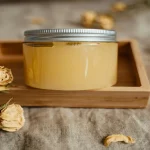
Milk thistle honey, due to its monofloral structure, is a type prone to crystallization. This is not a sign of spoilage, but rather an indication that the honey has not been subjected to heat treatment and that the enzymes within it have retained their viability. To restore crystallized honey to its original form, simply placing it in lukewarm water (bain-marie method) not exceeding 45°C is sufficient.
The Importance of Choosing Reliable Honey with Analysis Reports
It is not scientifically sufficient to determine the reliability of honey based solely on its color or taste. When choosing genuine milk thistle honey, laboratory analysis reports should always be consulted. These analyses clarify the pollen type distribution in the honey (whether it is monofloral or not), the HMF (heating indicator) value, the amount of proline (an amino acid that determines the quality of honey), and, most importantly, whether there are any pesticide or antibiotic residues. A reliable producer should be able to present this data transparently. Scientifically based and controlled production is the only way to guarantee the preservation of sensitive components like silymarin in honey and ensure that the consumer truly benefits from it.
Discover True Healing with Cahter Organic Quality
From the high-altitude plateaus of Siirt, Cahter Organic Milk Thistle Honey, which has won “Gold” and “Platinum” quality awards from the Paris International Honey Awards, brings the purest form of nature to your table. Our raw honeys, produced using the cold-filtering method and documented with analysis reports, offer this liver-friendly miracle with the highest nutritional value. Discover Cahter Organic Milk Thistle Honey today to experience this award-winning quality and provide holistic support to your body.