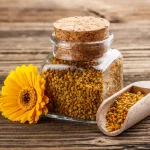
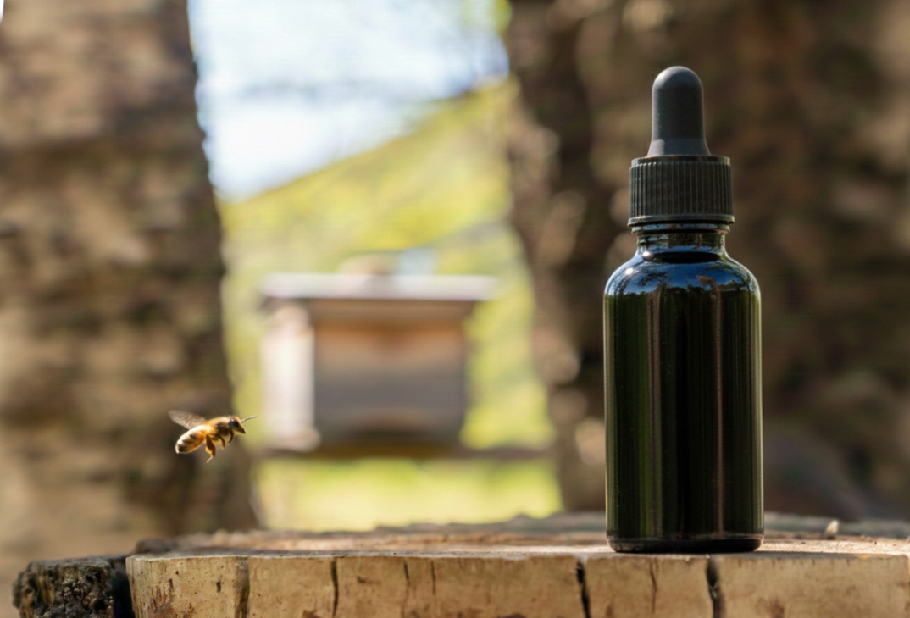
Propolis, one of nature’s strongest defense compounds, is a resinous substance produced by bees to seal cracks in the hive, prevent microbes, and protect the colony. Thanks to its antioxidant capacity, phenolic components, and natural protective effects, it stands out in a wide range of uses, from immune support to oral and dental health. In this article, we will examine what propolis is, the active compounds it contains, and the correct usage methods in detail.
What is Propolis?
Propolis is a natural mixture that bees collect from plant buds, young shoots, and tree resins. The bees combine these resins with their secretions to use it in the hive as both a structural insulation material and a microbial protective agent. Chemically, it has a complex structure composed of flavonoids, phenolic acids, aromatic esters, and natural fatty acids.
While the main purpose for bees is to maintain hygiene in the hive, propolis has long been regarded by humans as a natural protective, antioxidant, and biologically active compound. Its color can range from yellow to dark brown, even greenish tones; this variation is due to the diversity of plant resins it contains. When properly processed, propolis exhibits high biological activity and is now available in liquid extract, capsule, tablet, and raw forms.
Propolis Content: What Does It Contain?
It has a highly rich and variable chemical structure. Although the composition may vary depending on the plant species from which bees collect the resin, the general component ratio is usually similar. The average composition consists of: 50% resin and balsam, 30% beeswax, 10% aromatic oils, 5% pollen, and the remainder consists of organic and inorganic microcomponents.
The molecules most responsible for the biological effects of propolis are flavonoids and phenolic acid derivatives. Among them, pinocembrin, galangin, caffeic acid phenethyl ester (CAPE), and coumaric acid are particularly noteworthy. These compounds play an active role in antioxidant capacity, antimicrobial effect, and cellular protection mechanisms.
Propolis also contains essential fatty acids, terpenoids, steroid-like natural substances, trace compounds of vitamins A, E, and B groups, and minerals such as magnesium, zinc, and manganese. Thanks to this multi-layered content, it displays an effect profile based on hundreds of complementary natural compounds, rather than a single active substance.
Types of Propolis: (Green – Red – Brown Propolis)
Propolis is divided into three main groups based on the plant resin source collected by bees, considering factors such as color, component profile, and biological activity: green propolis, red propolis, and brown propolis. This classification is not only about color difference; each type’s phenolic structure, antioxidant capacity, and application areas differ significantly.
Green Propolis
It is mainly composed of resins collected from the Baccharis dracunculifolia plant in Brazil. Its most characteristic compound is artepillin-C, which stands out for its antioxidant capacity and effects supporting cellular defense. Its color tone can range from light green to olive green.
Red Propolis
It is mostly made from dark red resins obtained from the Dalbergia ecastaphyllum plant, which grows along the tropical coastal regions of Brazil. It contains a high concentration of isoflavonoids, which are present in much lower levels in other types. Red propolis has a high pigment concentration and, due to its phenolic diversity, has a very powerful antioxidant capacity. Its color tone ranges from bright red to dark burgundy.
Brown Propolis
It is the most widely found type globally. It is composed of compounds collected by bees from tree resins such as poplar, pine, birch, and oak in Europe, Asia, and the Middle East. Its content is mostly flavonoids, beeswax, aromatic esters, and resins. Compared to green and red propolis, it has a more balanced profile, but its geographic diversity results in a wider variety. Its color scale ranges from light brown to dark brown.
Propolis Benefits
Thanks to the flavonoids, phenolic acid derivatives, and natural resin components it contains, propolis is a bee product with versatile biological activity. Since these compounds work synergistically, the effects of propolis arise from its complex chemical structure, rather than a single substance.
Increases Antioxidant Activity
Propolis is rich in phenolic compounds such as pinocembrin, galangin, caffeic acid phenethyl ester (CAPE), and coumaric acid. These molecules help reduce oxidative stress caused by free radicals in cells. Propolis extract stabilizes cell membranes against oxidative damage.
Exhibits Antimicrobial Effect
Propolis contains phenolic structures that act as a natural barrier against bacteria, yeast, and some fungi. It has been repeatedly shown in laboratory settings to exhibit strong activity against microorganisms such as Staphylococcus aureus, Candida albicans, and Streptococcus mutans. This is why it is frequently used in oral hygiene products.
Supports Oral and Dental Health
Propolis extracts suppress the proliferation of bacteria that trigger plaque formation, supporting the healing process of gum sensitivity, canker sores, and mouth ulcers. Additionally, it can form a protective layer without damaging the enamel surface, making it a natural alternative in oral care products.
Supports Cellular Repair Processes
Compounds like CAPE and artepillin-C activate certain signaling pathways related to cell renewal. Therefore, propolis is widely used in cosmetic and dermatological products as a natural component that accelerates skin barrier repair. It also supports the healing of small injuries and microirritations.
Regulates Immune Response
The phenolic content of propolis modulates the response of immune cells, suppressing excessive inflammation. This effect contributes to the balancing of immunity but is described as immune-regulating rather than “immune-boosting.” This is particularly notable in chronic inflammatory processes.
Natural Protective Compound Feature
Propolis contains phenolic structures that delay lipid oxidation in foods exposed to oxygen. As a result, it is used as a natural preservative in some regions to extend the shelf life of foods. The same effect provides an advantage in terms of formulation stability in skincare products.
Helps Reduce Fatigue and Stress Caused by Free Radicals
By reducing oxidative stress, a more stable environment for cellular energy production is created. Therefore, regular consumption has a positive effect on reducing physical fatigue by supporting cell functions. This situation is particularly studied in the context of intense physical exertion, sports performance, and muscle recovery.
How to Use Propolis?
Propolis can be used in different forms, so the method of use varies depending on the product, concentration, and purpose. The most common form is drops (liquid extract), which has the highest bioavailability. Liquid propolis is usually taken by adding drops to water or a beverage at room temperature. In alcohol-based extracts, it is known that the active compounds dissolve faster when dropped into water. The daily dosage is generally between 10–20 drops, but a lower dose is preferred for children and sensitive individuals.
The capsule or tablet form is convenient for users with a regular consumption habit. This form of propolis usually contains phenolic content that has been brought to a specific level, ensuring the same effect profile in each capsule. This form is preferred when a high phenolic content is desired.
Raw propolis can be chewed directly, but its hard and resinous structure may not be suitable for everyone. When chewed, the phenolic components are gradually released and provide a local effect by coming into contact with the mucosa inside the mouth. Therefore, it is more often preferred for oral sensitivity.
Propolis products applied to the skin (cream, ointment, or serum) are used as supportive treatments for minor irritations, dryness, or skin barrier repair. These products usually contain low percentages of propolis extract because high phenolic concentration can lead to skin sensitivity.
The phenolic ratio on the product label, whether it is alcohol-based or water-based, and the recommended daily dosage must be taken into consideration. Since propolis is a powerful compound, beginners are advised to start with a low dose.
Which Propolis Form Should You Choose?
When choosing a propolis form, the main criteria are the product’s phenolic concentration, bioavailability, and how well it meets the intended use. For daily and fast absorption situations, liquid propolis drops are the most effective form; for those with alcohol sensitivity, water-based extracts are safer. Regular supplement users should get better results from capsules or tablets since they offer the same phenolic ratio in each capsule. For oral sensitivity or local effect, raw propolis provides slow release through chewing. For skin applications, propolis creams or serums formulated with a low percentage should be preferred.
How to Store Propolis?
If not stored properly, the activity of phenolic components may decrease, so the storage method depends on the form of the product. In general, propolis should be kept in a cool, dark, and dry environment. Liquid propolis drops can be stored at room temperature (18–24°C), but should not be exposed to direct sunlight, as light accelerates the degradation of phenolic structures. Capsule and tablet forms of propolis should be stored in a dry cupboard, in their sealed packaging. Raw propolis should be kept in a small airtight glass jar and stored in a cool place near the refrigerator to maintain its structure for a longer time. The cap of the product should be tightly closed after each use and kept away from moisture.
Why Do Propolis Prices Vary?
The main reason for the variation in propolis prices is that factors such as the product’s phenolic component density, production method, type of propolis, and geographical source differ for each brand. Types like green, red, and brown propolis have different content profiles and active compound densities, so their prices are not the same. Also, alcohol-based extracts provide higher bioavailability than water-based or raw propolis, resulting in different production costs. The beekeeping method used, the plant diversity in the geography, chemical analysis reports, and the brand’s quality control processes are also significant factors determining the final price of propolis.
Who Is Propolis Not Suitable For?
People who are allergic to bee products, pollen, or honey may also react to propolis, so it is not recommended for them. Individuals with asthma, atopic dermatitis, or a severe allergic history may experience symptoms such as redness, itching, or shortness of breath upon contact with propolis. As there is insufficient clinical data on the safety of propolis for pregnant women and breastfeeding mothers, it should not be used without medical approval. Additionally, individuals taking blood thinners may face risks due to potential interactions with propolis. For children, only alcohol-free doses are recommended. Therefore, before use, individual health status and current treatments should be carefully considered.
Things to Consider When Using Propolis
Both the form of the product and the individual’s health status should be considered. If using it for the first time, start with a low dose and observe whether there are any allergic reactions (itching, redness, swelling of the lips or throat). Those sensitive to bee products should not use propolis without a doctor’s recommendation. When consuming liquid propolis, the recommended drop amount should not be exceeded; especially alcohol-based extracts should not be given to children. Those on blood thinners, with chronic diseases, pregnant women, and breastfeeding mothers should consult a specialist before use. Also, when mixing propolis with water, very hot liquids should be avoided, as high temperatures may alter the structure of active compounds, and it should be consumed with beverages at room temperature.
Scientific Studies on Propolis
Scientific studies on propolis have largely focused on explaining the effects of this natural compound through phenolic acids and flavonoids (Wagh, 2013; Sforcin & Bankova, 2011). In laboratory cell culture research, molecules such as caffeic acid phenethyl ester (CAPE), pinocembrin, and galangin have been shown to stabilize cell membranes under oxidative stress, limit DNA damage, and regulate inflammatory responses (Wagh, 2013).
Furthermore, many studies have reported that propolis extract exhibits significant antimicrobial activity against microorganisms such as Staphylococcus aureus, Candida albicans, and Streptococcus mutans (Mirzoeva & Calder, 1996; Ozan et al., 2007; Koo et al., 2000). Clinical pilot studies in oral health have highlighted propolis’ potential to reduce plaque formation (Parolia et al., 2010), while small-scale studies on athlete physiology show that propolis supplementation can reduce oxidative stress markers after exercise (Nagai et al., 2006).
Experimental dermatological studies have also revealed that propolis extracts can support keratinocyte regeneration and play a role in barrier repair (Silva et al., 2019). These findings show that the effects of propolis arise not from a single active compound but from the synergistic effect of numerous complementary phenolic structures (Sforcin & Bankova, 2011).
To learn more about propolis products and incorporate this natural way of life into your daily life, please visit our Propolis page. You can also find more detailed information about the active systems propolis can use and its health effects in our blog post, “What are the Benefits of Propolis?”
Frequently Asked Questions
Can Propolis be used every day?
Yes, it can be taken daily in the appropriate dose. It is recommended for first-time users to start with a low dose and observe the body’s response. When used regularly, the phenolic concentration and form of the product must always be taken into account.
Can Propolis be given to children?
Only alcohol-free, water-based propolis should be given to children. The appropriate dose according to age is important, and it should not be used in children under the age of 1 without a doctor’s recommendation.
Should Propolis be taken on an empty stomach or after meals?
Liquid propolis can generally be taken with or without food, but when taken on an empty stomach, absorption may be faster. Those with sensitive stomachs may prefer to take it after meals.
Can Propolis cause allergies?
Propolis can cause allergic reactions in people who are sensitive to bee products, pollen, or honey. If symptoms like itching, redness, or swelling of the lips/throat occur, its use should be discontinued immediately.
Does Propolis spoil?
When stored properly, propolis remains stable for a long time, but light, heat, and moisture can cause its phenolic components to degrade. The cap should be tightly closed and kept in a cool, dark place.
Why does Propolis taste bitter?
The bitter and sharp taste of propolis comes from the phenolic acids, flavonoids, and resin components it contains. When these natural compounds are present in high concentrations, the taste profile becomes more pronounced.
References:
Wagh, V. D. (2013). Propolis: A wonder bees product and its pharmacological potentials. Journal of Pharmacology & Pharmacotherapeutics, 4(4), 281–286.
https://doi.org/10.4103/0976-500X.119709
Sforcin, J. M., & Bankova, V. (2011). Propolis: Is there a potential for the development of new drugs? Journal of Ethnopharmacology, 133(2), 253–260.
https://doi.org/10.1016/j.jep.2010.12.048
Mirzoeva, O. K., & Calder, P. C. (1996). The effect of propolis and its components on eukaryotic cell activation and microbial growth. Microbiological Research, 152(2), 239–246.
https://doi.org/10.1016/S0944-5013(96)80145-1
Koo, H., Rosalen, P. L., Cury, J. A., Park, Y. K., Bowen, W. H. (2000).
Effects of Apis mellifera propolis on the activities of Streptococcus mutans. Journal of Ethnopharmacology, 71(1–2), 93–98.
https://doi.org/10.1016/S0378-8741(00)00157-6
Parolia, A., Thomas, M. S., Kundabala, M., & Mohan, M. (2010).
Propolis and its potential uses in oral health. International Journal of Medicine and Medical Sciences, 2(7), 210–215.
Nagai, T., Inoue, R., Inoue, H., & Suzuki, N. (2006).
Antioxidative activities of propolis from different regions of the world. Food Chemistry, 101(4), 1383–1392.
https://doi.org/10.1016/j.foodchem.2006.03.045
Silva, J. C., Rodrigues, S., Feás, X., & Estevinho, L. M. (2019).
Propolis can interfere with keratinocyte cell cycle: Targeting skin repair and regeneration. Journal of Pharmacy and Pharmacology, 71(2), 301–312.
https://doi.org/10.1111/jphp.13036